You have probably already heard that BRICS is becoming an increasingly important voice in global politics and economics. However, understanding what the BRICS Summit 2026 could mean for member countries, emerging economies, trade, finance, and the global balance of power requires looking beyond the headlines. In this guide, we’ll explain what the summit is, why it matters, the issues likely to shape discussions, and what to watch next.
Key Takeaways
- The BRICS Summit 2026 is a major diplomatic meeting that brings BRICS members together to discuss economic cooperation, political coordination, and global development.
- BRICS represents an effort by major emerging and developing economies to increase their influence within the global economic and political system.
- Trade, investment, development finance, technology, energy, and reform of global institutions are likely to remain central BRICS priorities.
- The expansion of BRICS has increased the group’s geographic reach while also making coordination among members more complex.
- Local-currency trade and payment systems are important areas of discussion because they could reduce dependence on a single international currency for some transactions.
- The BRICS Summit 2026 will be closely watched for concrete agreements, joint declarations, and initiatives that continue beyond the diplomatic event itself.
- Businesses, policymakers, and investors should focus on official announcements and long-term implementation rather than summit headlines alone.
What Is the BRICS Summit 2026?
The BRICS Summit 2026 is an annual high-level meeting where the leaders of BRICS countries are expected to discuss shared economic, political, and development priorities. The summit provides a platform for member states to coordinate positions, announce cooperative initiatives, and issue a joint declaration on areas where they find common ground.
First, BRICS began as a grouping of Brazil, Russia, India, China, and South Africa, with the acronym originally associated with the major emerging economies that were expected to play a larger role in the global economy. Over time, the group has developed into a broader platform for political dialogue, economic cooperation, and discussion of global governance.
Moreover, the meaning of BRICS has evolved as the grouping has expanded. An expanded BRICS brings together countries with different economic structures, foreign-policy priorities, and regional interests, making the organization more globally representative while also increasing the difficulty of reaching consensus.
For example, a BRICS discussion about trade may involve countries that are major exporters of energy, manufacturing products, agricultural goods, and services. This diversity can create new opportunities for cooperation, but it can also produce competing priorities.
The BRICS Summit is therefore not simply a ceremonial meeting. It is a forum where members can attempt to turn shared interests into policy initiatives, financial cooperation, diplomatic positions, and long-term partnerships.
[Internal link: “BRICS countries and global economic influence” → suggested target page/topic: BRICS member countries guide]
Why Does the BRICS Summit 2026 Matter?
The BRICS Summit 2026 matters because decisions and discussions within the group can influence international trade, development finance, diplomacy, and debates about the future structure of global governance. The importance of the summit comes not only from the size of individual member economies but also from the group’s attempt to coordinate the interests of countries outside the traditional Western-led institutions.
Second, the summit matters because emerging economies want a greater role in shaping international rules and institutions. BRICS members have repeatedly emphasized issues such as representation in global governance, development priorities, and the need for reforms in international financial institutions.
For example, countries may debate whether existing international organizations adequately reflect today’s global economic realities. The BRICS platform allows members to coordinate their positions before participating in wider global forums.
At the same time, the summit is important for economic cooperation. Discussions can cover trade links, infrastructure, financial systems, investment, technology, energy security, and sustainable development.
The key question is not whether BRICS will replace existing global institutions overnight. The more practical question is how BRICS initiatives may create additional institutions, partnerships, and channels of cooperation alongside the existing global system.
Why the Expanded BRICS Group Attracts Global Attention
BRICS expansion matters because a larger membership can increase the group’s economic and geographic reach. At the same time, expansion introduces countries with different strategic interests, which can make common decision-making more challenging.
For example, an energy-exporting country may prioritize stable energy markets, while another member may focus more heavily on manufacturing supply chains or digital technology. Finding policies that serve all members requires negotiation and flexibility.
This is why the BRICS Summit 2026 should be evaluated by its specific outcomes rather than by membership size alone.
[Internal link: “global governance reform and emerging economies” → suggested target page/topic: future of international institutions]
India and BRICS Hosting
India is a founding member of BRICS and is chairing the BRICS group for the fourth time in 2026. India previously chaired BRICS in 2012, 2016, and 2021. In 2026, India hosted the 18th BRICS Summit in New Delhi.
What Issues Could Shape the BRICS Summit 2026 Agenda?
The BRICS Summit 2026 agenda is likely to focus on areas where member countries see opportunities for practical cooperation and greater influence in global affairs. Although the final agenda and official priorities depend on the host country and participating governments, several recurring BRICS themes are likely to remain important.
Trade and Economic Cooperation
Trade cooperation is a core BRICS priority because stronger commercial relationships can reduce barriers and create new markets among participating economies. Members may discuss ways to increase trade, improve logistics, strengthen supply chains, and encourage investment.
For example, improved transport connections or simplified business procedures could help companies access markets that were previously difficult or expensive to reach.
However, greater trade cooperation does not automatically mean that all members will adopt identical trade policies. BRICS cooperation generally depends on negotiated agreements rather than complete economic integration.
Local-Currency Trade and Financial Cooperation
Local-currency trade involves conducting eligible cross-border transactions using national currencies instead of relying exclusively on a third currency. This topic has attracted significant attention because it could affect transaction costs, currency management, and the structure of international payments.
For example, if two trading partners agree to settle a transaction directly using their own currencies, businesses may reduce their need to convert through another currency for that specific transaction.
That being said, local-currency settlement is different from creating a single BRICS currency. These are separate concepts, and discussions about one should not automatically be interpreted as confirmation of the other.
The BRICS Summit 2026 may therefore generate continued interest in:
- Cross-border payment systems
- Local-currency settlement mechanisms
- Financial cooperation
- Central bank coordination
- Development financing
- Payment infrastructure
[Internal link: “local currency trade explained” → suggested target page/topic: guide to international currency settlement]
Development Finance and the New Development Bank
Development finance is important to BRICS because infrastructure, energy, transportation, and sustainable development projects often require long-term funding. Institutions associated with BRICS cooperation can provide an additional channel for financing projects in member and participating countries.
For example, a large infrastructure project may require financing over many years. Development banks can support such projects when commercial financing alone is insufficient or unsuitable.
The New Development Bank is one of the most visible institutional outcomes associated with BRICS cooperation. Its activities demonstrate how summit-level discussions can be connected to long-term financial institutions.
[Internal link: “New Development Bank projects and financing” → suggested target page/topic: development bank guide]
Reform of Global Institutions
Global governance reform refers to efforts to change how international institutions represent countries and make decisions. BRICS members have frequently argued that developing and emerging economies should have a stronger voice in major global institutions.
For example, representation in international financial organizations and decision-making bodies remains a major topic in debates about the modern global order.
The BRICS Summit 2026 could continue these discussions by focusing on:
- Representation of developing countries
- International financial reform
- Multilateral cooperation
- Development priorities
- Reform of global decision-making institutions
BRICS does not need to agree on every geopolitical issue to advocate for greater representation in global governance. Shared institutional interests can create opportunities for cooperation even when members have different national policies.
Technology and Digital Cooperation
Digital cooperation is becoming increasingly important because technology now affects trade, finance, public services, security, and economic competitiveness. BRICS countries may explore cooperation involving digital infrastructure, artificial intelligence, cybersecurity, and cross-border digital systems.
For example, interoperable payment technology could make international transactions faster and more efficient for businesses and consumers.
At the same time, technology cooperation can be complex because countries have different regulations, security requirements, and domestic technology industries. Successful digital cooperation depends on practical standards and compatible systems rather than broad political declarations alone.
https://tvbrics.com/en/news/brics-accelerates-trade-through-digital-economy-and-technology-sharing
Energy and Sustainable Development
Energy cooperation is a major strategic issue because BRICS members include significant energy producers and consumers. The group may discuss energy security, investment, renewable energy, technology, and the transition toward lower-carbon economic systems.
For example, a country with strong renewable-energy manufacturing capabilities may cooperate with a country seeking to expand solar or other clean-energy infrastructure.
This creates an important balance. BRICS countries must address both immediate energy security and long-term sustainability goals.
How Could the BRICS Summit 2026 Affect the Global Economy?
The BRICS Summit 2026 could affect the global economy by influencing trade relationships, investment priorities, development financing, and international policy coordination. Its impact, however, will depend on whether summit discussions produce initiatives that are actually implemented.
First, BRICS cooperation could create new commercial opportunities between member economies. Companies may benefit if governments improve payment systems, transport connections, investment frameworks, or business cooperation.
Second, financial initiatives could influence how some international transactions are conducted. A gradual increase in local-currency settlement could diversify payment options without immediately transforming the entire global monetary system.
Third, development financing could support infrastructure and economic projects. These projects may have long-term effects on trade routes, energy systems, and regional economic development.
| Area | Potential BRICS Impact | What to Watch |
|---|---|---|
| Trade | Greater cooperation between member markets | New agreements and trade initiatives |
| Finance | More payment and settlement options | Local-currency mechanisms |
| Infrastructure | Additional development financing | New project announcements |
| Technology | Cross-border digital cooperation | Shared standards and platforms |
| Energy | Cooperation among producers and consumers | Energy and sustainability commitments |
| Global governance | Coordinated calls for institutional reform | Joint summit declarations |
The most important distinction is between announcements and implementation. A summit declaration can establish political direction, but measurable economic effects usually require regulations, financing, institutions, and long-term cooperation.
What Could the BRICS Summit 2026 Mean for India?
For India, the BRICS Summit 2026 is important because the platform offers opportunities to strengthen economic partnerships while contributing to discussions about the interests of emerging and developing economies. India can use BRICS engagement to support trade, investment, technology, development, and broader international cooperation.
Moreover, India occupies a distinctive position within BRICS because it maintains relationships with multiple major economies and participates in several international forums. This creates opportunities for diplomatic engagement across different regions and institutions.
For example, Indian businesses may benefit from improved access to markets, stronger payment mechanisms, or infrastructure initiatives that support international commerce.
However, India’s national interests will continue to guide its participation in BRICS. Cooperation within the group does not mean that every member will share the same foreign-policy or economic priorities.
Trade Opportunities for Indian Businesses
BRICS cooperation could create additional opportunities for Indian businesses by strengthening connections with emerging markets. Exporters, manufacturers, technology companies, and service providers may benefit if commercial barriers are reduced or business networks expand.
For example, a small or medium-sized Indian company exploring international markets could benefit from improved logistics, digital payment systems, or trade relationships.
Businesses should therefore watch for:
- Trade facilitation initiatives
- Investment partnerships
- Digital commerce opportunities
- Payment-system developments
- Infrastructure agreements
- Sector-specific cooperation
New Delhi Declaration In Brics Summit 2026
The New Delhi Declaration is one of the key outcomes of the BRICS Summit 2026. It reflects the member countries’ shared commitment to strengthening cooperation in areas such as economic development, global governance, peace and security, sustainable development, and the interests of the Global South. The declaration also highlights the importance of a more inclusive and representative international system.
What Is the Difference Between BRICS Cooperation and a BRICS Currency?
BRICS cooperation is a broad framework for political and economic collaboration, while a BRICS currency would refer to a specific shared monetary arrangement. These two concepts should not be treated as interchangeable.
First, BRICS cooperation already includes discussions about trade, finance, development, technology, and institutional reform. A shared currency would require a much deeper level of monetary coordination.
For example, local-currency trade between two countries does not require the creation of a new common currency. The countries can continue using their existing national currencies.
| Concept | Meaning | Level of Coordination |
|---|---|---|
| BRICS cooperation | Broad economic and political collaboration | Flexible |
| Local-currency settlement | Trade conducted using participating national currencies | Bilateral or multilateral |
| Shared currency | A common currency used by multiple countries | Very high coordination |
A shared currency would require extensive agreement on financial, institutional, and monetary issues. Readers should therefore rely on official announcements rather than assuming that discussions about payments automatically mean a new currency is being introduced.
[Internal link: “BRICS currency explained” → suggested target page/topic: international monetary systems guide]
What Are the Biggest Challenges Facing BRICS?
The biggest challenge facing BRICS is maintaining meaningful cooperation among countries with diverse economies, political systems, and strategic interests. Expansion can increase the group’s influence, but diversity can also make consensus more difficult.
Reaching Consensus Among Diverse Members
Consensus is challenging because BRICS members do not share identical national priorities. Economic interests, regional concerns, trade relationships, and geopolitical strategies can differ significantly.
For example, members may agree that global institutions need reform while disagreeing on the exact structure of those reforms.
This means BRICS is likely to make progress most easily in areas where practical interests overlap.
Turning Declarations Into Action
Implementation is the test that determines whether summit commitments produce lasting results. Governments may announce ambitious goals, but those goals require funding, institutions, regulations, and continued political support.
For example, a cross-border payment initiative may require central-bank cooperation, technical infrastructure, legal agreements, and participation from financial institutions.
The long-term success of BRICS will depend more on implementation than on the number of announcements made at a summit.
What Should Businesses and Investors Watch During the BRICS Summit 2026?
Businesses and investors should watch for concrete policy announcements that could affect trade, finance, investment, technology, and infrastructure. The most useful information will usually come from official declarations, signed agreements, institutional announcements, and follow-up implementation plans.
Focus on these areas:
- New trade initiatives that could affect market access.
- Payment and financial agreements involving local currencies or cross-border systems.
- Infrastructure and development projects supported by multilateral institutions.
- Technology partnerships involving digital systems or artificial intelligence.
- Energy agreements involving supply, investment, or clean technology.
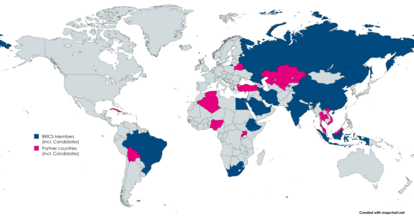
- Membership and partnership developments affecting the future structure of BRICS
Businesses should separate short-term market reactions from long-term structural changes. A headline may influence sentiment immediately, while the actual economic effect of an agreement may take years to develop.
What Happens After the BRICS Summit 2026?
What happens after the BRICS Summit 2026 will be more important than the summit itself because implementation determines whether commitments become measurable outcomes. Governments and institutions will need to convert political agreements into projects, policies, financing arrangements, and technical cooperation.
First, readers should review the official summit declaration and compare it with previous commitments. This can help identify whether BRICS is introducing new priorities or continuing existing programs.
Second, businesses should monitor announcements from financial institutions, government ministries, and trade organizations. These organizations are often responsible for implementing the initiatives discussed by political leaders.
Third, policymakers and researchers should track measurable indicators. The most meaningful signs of progress may include new projects, trade agreements, financing decisions, payment-system launches, and institutional reforms.
Conclusion
The BRICS Summit 2026 represents an important opportunity for member countries to shape cooperation on trade, finance, technology, development, energy, and global governance. The summit’s real significance will depend on whether political discussions lead to practical and lasting action.
Ultimately, BRICS is best understood as an evolving platform rather than a single unified economic or political system. Its members share some major interests, but they also have different priorities that will continue to shape the group’s future.
As the BRICS Summit 2026 approaches, the smartest approach is to focus on verified announcements, official documents, and measurable implementation. By following these developments carefully, businesses, policymakers, researchers, and citizens can better understand how BRICS may influence the next phase of the global economy.
People Also Read
जनगणना 2027: भारत की प्रथम डिजिटल जनगणना
जनगणना 2027: भारत की प्रथम डिजिटल जनगणना Explained
Public Examinations (Prevention of Unfair Means) Amendment Act 2026: क्या बदला, नई सजा, जुर्माना और प्रमुख प्रावधान
Public Examinations (Prevention of Unfair Means) Amendment Act 2026:
Prevention of Insults to National Honour Amendment Bill 2026: Vande Mataram Legal Protection : वंदे मातरम् की कानूनी सुरक्षा का विस्तार
Prevention of Insults to National Honour Amendment Bill 2026: Vande Mataram Legal Protection
Commonwealth Games 2026: India Medal Winners, Medal Tally and Important Facts
Commonwealth Games 2026: India Medal Winners, Medal Tally